
How to Keep Cut Flowers Fresh for a Wedding

Updated: Sep 22

Wedding flowers have a long day.
Before a bouquet ever makes it into your hands, the flowers have been processed, conditioned, hydrated, stored, transported, and carefully timed so they look their best when they actually need to. And on a wedding day—especially a warm, humid New Orleans one—how flowers are handled matters.
As florists, keeping flowers fresh isn't about a clever trick or something you add to the water at the last minute. It's mostly about good flower care from the beginning: clean water, proper hydration, the right temperature, and keeping flowers out of stressful conditions for as long as possible.
If you're wondering how to keep wedding flowers fresh overnight, how to care for a bridal bouquet before the ceremony, or what actually helps cut flowers last longer, here's what we recommend.
Start With Properly Conditioned Flowers
Fresh flowers need water, but getting them properly hydrated starts well before the wedding day.
When flowers arrive at our studio, we process them according to what each variety needs. Stems are trimmed, foliage that would sit below the waterline is removed, buckets and vessels are kept clean, and the flowers are given time to hydrate before they're used in an arrangement.
Different flowers behave differently. Some are incredibly hardy. Others are more sensitive to heat, handling, or being out of water. Part of professional floral design is knowing which flowers will work for a particular arrangement, location, season, and amount of time they need to look beautiful.
That's especially important for weddings in New Orleans, where heat and humidity are part of the equation for much of the year.

How to Keep Wedding Flowers Fresh Overnight
If you have cut flowers or finished arrangements the night before a wedding, the goal is simple: keep them hydrated, cool, and out of direct sunlight.
Make sure stems have plenty of clean water and keep the flowers in the coolest appropriate space available. Avoid sunny windows, warm kitchens, garages, porches, and anywhere with significant temperature swings.
And definitely don't leave wedding flowers in a car overnight—or even for a short period on a warm day. Cars heat up incredibly quickly, and flowers can decline much faster than you might expect.
If you're storing a bridal bouquet overnight, keep the stems in water whenever the bouquet design allows for it. You don't need to submerge the entire bouquet; you simply want the cut ends of the stems to remain hydrated without soaking ribbon, wrapping, or other finished details.
One important note: colder isn't always automatically better. A home refrigerator can contain fruits and vegetables that release ethylene gas, which can accelerate aging in some flowers. Professional floral coolers are designed specifically for flowers and aren't the same environment as a refrigerator full of groceries.

What to Do the Morning of the Wedding
On the wedding morning, resist the temptation to take bouquets out early simply because everyone is excited to see them.
Leave flowers in water and in a cool location until they're actually needed.
For bridal and bridesmaid bouquets, we want to minimize the amount of unnecessary time they're being carried around before photographs and the ceremony. If there's a break between photos and the ceremony, returning bouquets to water—when practical—can help keep them hydrated.
Also be thoughtful about where you set them down. A bouquet sitting in direct sun on a windowsill or outside for thirty minutes is experiencing very different conditions from one waiting inside in the air conditioning.

Keeping Bridal Bouquets Fresh Before the Ceremony
Bouquets are a little different from centerpieces because they're designed to be carried, which means they inevitably spend time out of water.
The best thing you can do is limit that time.
Keep bouquets in their water vessels until photography begins, and return them to water during longer breaks when possible. Hold them by the stems rather than repeatedly touching the flowers themselves, and avoid leaving them in direct sunlight.
For outdoor weddings, particularly in New Orleans, timing becomes even more important. We try to avoid placing or exposing delicate flowers earlier than necessary. A beautiful bouquet doesn't benefit from spending an extra hour outside in August just because the ceremony space was ready early.
Some flowers naturally tolerate heat and time out of water better than others, which is one reason your season, venue, and wedding-day logistics matter when we're selecting flowers.
What About Centerpieces and Wedding Arrangements?
Centerpieces and arrangements designed in water have an advantage: they can continue drinking throughout the event.
Make sure arrangements have adequate water, particularly if they've been transported or sitting for a while. Floral designs can drink a surprising amount, especially in warm conditions.
For outdoor events, shade and timing are your friends. Whenever possible, flowers should be installed as close to the event as the production schedule reasonably allows rather than sitting outside for hours.
Indoors, avoid placing arrangements directly beside strong heat sources or in intense sunlight if there's another option.

Large Floral Installations Need a Different Approach
Not every wedding flower can simply be placed back into a vase.
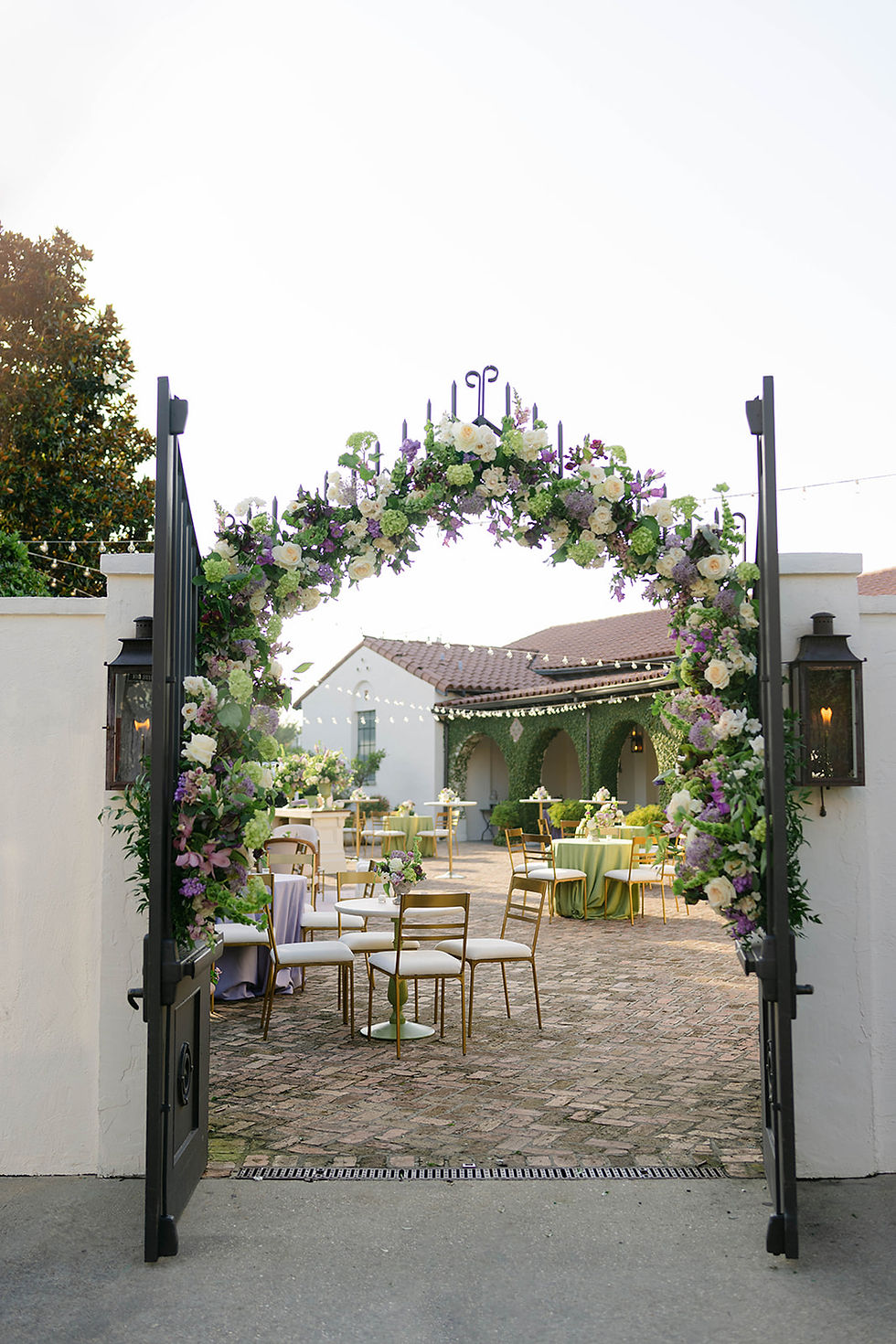
Arches, floral meadows, urns, staircase flowers, hanging installations, and other large-scale pieces all have their own mechanics. Depending on the design, flowers may be arranged into water sources or other floral mechanics that help keep them hydrated.
This is where flower selection becomes particularly important.
When we're designing an installation, we're not only thinking about how it looks when we build it. We're thinking about where it's going, how long it needs to last, whether it's indoors or outdoors, the temperature, when it can be installed, and which flowers are appropriate for those conditions.
A delicate flower that is wonderful in a water-filled centerpiece may not be the right choice for an outdoor ceremony installation in New Orleans in the middle of summer.
Good floral design has to work in real life, not just in a photograph.

If You're Doing Your Own Wedding Flowers
If you're arranging your own wedding flowers, keep it simple.
Start with very clean buckets and vessels. Trim the stems with clean, sharp tools and remove leaves that will sit below the waterline. Give the flowers plenty of fresh water and time to hydrate before you begin arranging.
Once they're arranged, keep them cool and out of direct sunlight for as long as possible.
Most importantly, give yourself more time than you think you'll need. Processing and arranging a large quantity of flowers takes time, and wedding flowers have to be transported and placed in addition to being designed.
If you're buying flowers several days before the wedding, research the specific varieties you're using. Flowers don't all open, hydrate, or age at the same rate, so there isn't one storage timeline that works perfectly for everything.
Do Soda, Vodka, Hairspray, or Other Flower Hacks Work?
There are a lot of flower-care tricks floating around the internet.
You've probably heard some version involving lemon-lime soda, sugar, vodka, bleach, pennies, aspirin, hairspray—or a combination that starts to sound more like a cocktail recipe than flower care.
For wedding flowers, we wouldn't overcomplicate it.
The things that make the biggest difference aren't particularly glamorous: clean vessels, clean water, properly conditioned stems, adequate hydration, appropriate temperatures, thoughtful flower selection, and as little unnecessary time in heat or direct sun as possible.
Commercial flower food can be useful when it's used according to its directions. Beyond that, we'd much rather focus on proper care than experiment with something from the liquor cabinet the night before a wedding.
The Best Way to Keep Wedding Flowers Fresh
Ultimately, keeping wedding flowers fresh isn't one thing you do right before the ceremony. It's a process that begins well before the flowers arrive at the venue.
At Leaf + Petal, we're thinking about flower care from the moment flowers come into our studio through the moment the final arrangement is placed. We consider the season, the venue, transportation,
installation timing, temperature, mechanics, and how each flower will actually behave throughout the wedding day.
For our couples, that's part of the point of hiring a professional florist. You shouldn't need to spend your wedding morning wondering whether your bouquet needs more water or whether the ceremony flowers have been sitting in the sun too long.
We'll worry about the flowers.
If you're planning a wedding in New Orleans and looking for floral design that feels organic, layered, and a little unexpected, we'd love to hear what you're dreaming up.


Wow! Thank you for sharing those tips! They will be so helpful for my niece's big day in October! & God bless you for sharing information without the need for an email or the intrusive request for registration or money--you are truly a class act!